
If you’ve searched “which insulation is best for attic,” you’ve probably noticed the answer changes depending on who’s writing it. A contractor in Minnesota will tell you something different than one in Phoenix — and neither of them is thinking about Los Angeles’ unique mix of hot, dry summers, mild winters, and (in some neighborhoods) strict fire-hazard building codes.
The short answer: for most Los Angeles attics, CertainTeed R-38 fiberglass batt insulation offers the best balance of cost, performance, and longevity — but the right choice really depends on your attic’s layout, your home’s age, and whether you’re dealing with existing damage. Below, we break down the three most common options so you can make an informed decision before requesting a quote.
The 3 Main Types of Attic Insulation
1. Fiberglass Batt Insulation
Fiberglass batts are pre-cut panels of woven glass fiber that install between attic joists. They’re the most widely used insulation material in Southern California for good reason:
- Cost-effective compared to spray foam
- Non-combustible, which matters in LA’s warmer inland valleys
- Straightforward installation in attics with regular joist spacing
- Reaches high R-values (R-38 to R-49) without excessive thickness
This is the material GreenTek installs most often for attic insulation projects across the San Fernando Valley, using CertainTeed R-38 batts as our standard.
2. Blown-In (Loose-Fill) Insulation
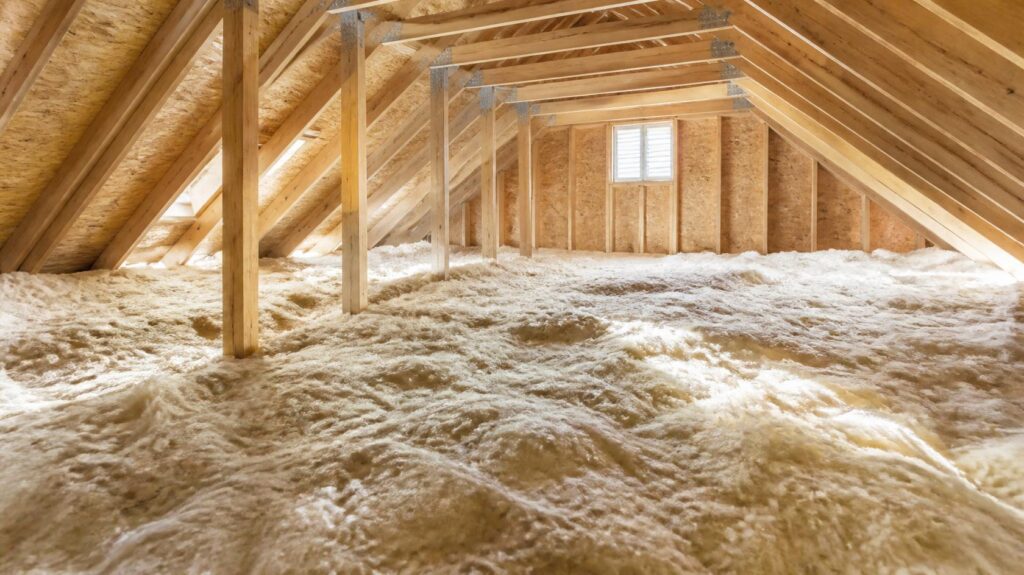
Blown-in insulation — typically fiberglass or cellulose — is installed using specialized equipment that fills gaps, corners, and irregular spaces batts can’t reach.
- Best for older homes with uneven joist spacing or obstructions
- Can be installed over existing insulation in most cases, as long as it isn’t wet or damaged
- Faster installation with minimal disruption — most blown-in insulation jobs are completed in a single day
- Slightly more prone to settling over time than batts
3. Spray Foam Insulation
Spray foam is the premium option, applied as a liquid that expands to seal gaps and insulate simultaneously.
- Air-seals and insulates in one step — no separate air-sealing needed
- Highest upfront cost, but can reduce long-term energy loss
- Doesn’t settle or lose R-value over time the way loose-fill can
- Worth prioritizing in homes with significant air leakage or in Very High Fire Hazard Severity Zones common in foothill communities like Woodland Hills, Calabasas, and Chatsworth
If your project also involves gaps around pipes or exterior walls, our spray foam insulation service can be paired with attic work for a more complete air seal.
Quick Comparison Table
| Material | Best For | Approx. Cost | Lifespan |
| Fiberglass Batt | Standard, accessible attics | $ | 80+ years |
| Blown-In | Irregular spaces, retrofits | $$ | 20–30 years (may settle) |
| Spray Foam | Air sealing, fire-zone homes | $$$ | 80+ years |
What Actually Matters More Than the Material: R-Value
Federal guidelines recommend R-38 to R-49 for attics in most of Southern California’s climate zone. If your existing insulation is old, compressed, or below this range, the material you pick matters less than simply getting your attic up to code. This is one of the most common issues we find when doing a free estimate — homes built before the 1990s frequently have R-13 to R-19 insulation, well under today’s recommended levels.
When Your Attic Needs More Than New Insulation
Before adding any new material, it’s worth checking whether your attic has underlying issues that insulation alone won’t fix:
- Contaminated or pest-damaged insulation may need full removal — see our attic cleaning & sanitization service
- Rodent activity should be addressed with rodent proofing before new insulation goes in, or you’ll be re-doing the job within a year
- Wall cavities losing heat independently of the attic may need wall insulation as well
Bottom Line for LA Homeowners
For the majority of attics we insulate across Van Nuys, Encino, Sherman Oaks, and the greater San Fernando Valley, CertainTeed R-38 fiberglass batts deliver the best return on investment. Homes with irregular framing benefit from blown-in insulation, and homes in fire-hazard zones or with significant air leakage should strongly consider spray foam.
The best way to know for certain is a free, no-obligation inspection — our team will assess your attic’s current R-value, layout, and any underlying issues, then recommend the material that actually fits your home rather than a one-size-fits-all answer.
Get your free attic insulation estimate → Call (323) 425-4094 — most homes are eligible for up to 30% in federal tax credits, and we respond within 1 hour during business hours.