
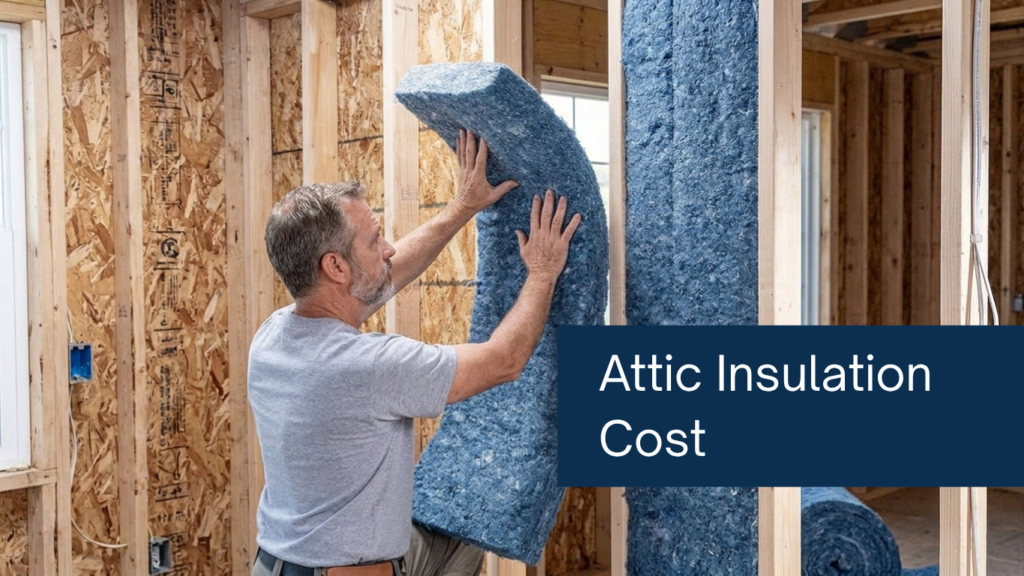
Attic insulation typically costs around 1–4 per square foot installed, depending on the material, R-value, labor, and attic condition. For a 1,000-square-foot attic, that means a preliminary budget of 1,000–4,000 before additional expenses. Old insulation removal, air sealing, and necessary repairs can increase the final price.
Fiberglass, cellulose, and spray foam offer different costs and performance benefits. The right choice depends on your attic structure, insulation needs, and budget. Homeowners in Los Angeles and the San Fernando Valley should also consider local installation conditions and applicable California energy requirements.
The U.S. Department of Energy’s insulation guide explains how insulation and R-values affect heat transfer and home energy efficiency.
How Much Does Attic Insulation Cost Per Square Foot in 2026?
Professional attic insulation generally costs 1–4 per square foot for many conventional projects. This is a broad budgeting range, not a guaranteed price for every home. Material selection, labor, insulation depth, and preparation affect the final estimate.
Material-only prices do not include every installation expense. Your quote may also cover equipment, labor, cleanup, and air sealing. Compare estimates with matching materials, target R-values, and project requirements.
Estimated Cost by Attic Size
| Attic Size | Estimated Installed Cost |
| 500 sq. ft. | 500–2,000 |
| 1,000 sq. ft. | 1,000–4,000 |
| 1,500 sq. ft. | 1,500–6,000 |
These estimates use a broad 1–4 per-square-foot range. They do not guarantee local pricing or include every possible extra expense. Contractor minimum charges and attic repairs may increase your total.
Attic Insulation Cost by Material Type
The insulation material affects both the upfront price and installation method. Fiberglass batts and blown-in insulation are common options for many attics. Spray foam may cost more, depending on the product and application.
Fiberglass Batt and Roll Insulation
Fiberglass batts and rolls typically cost around 0.80–2.60 per square foot installed. They work well in accessible attics with regular joist spacing. Poor fitting, gaps, and compressed material can reduce their effectiveness.
Blown-In Fiberglass and Cellulose
Blown-in fiberglass often costs approximately 0.90–2.40 per square foot installed. Cellulose may cost around 1–4 per square foot, depending on project conditions. Both can cover irregular spaces, but correct depth and even distribution are essential.
Spray Foam and Other Insulation Options
Spray foam may cost around 1.50–5 per square foot, depending on foam type, thickness, and application. Open-cell foam is generally less dense, while closed-cell foam provides greater R-value per inch. Mineral wool, rigid foam boards, and radiant barriers may also suit specific applications.
The best material depends on the attic rather than price alone. Compare installed costs at a similar target R-value. Ask how each option addresses air leakage, moisture, and ventilation.
What Factors Affect Attic Insulation Installation Costs?
Attic size is only one part of the pricing calculation. Difficult access, low clearance, and obstructions can increase installation time. Existing insulation may also need inspection before new material is added.
R-value measures how effectively insulation resists heat flow. Higher R-values generally require more material or products with greater thermal resistance per inch. Your recommended level depends on climate, existing insulation, building design, and applicable requirements.
Air sealing and ventilation can also affect project costs. The U.S. Department of Energy’s insulation and air-sealing guidance explains why both matter for building performance. Water damage, pest contamination, and necessary repairs may add further expenses.
How Much Does Attic Insulation Cost in Los Angeles?
Los Angeles attic insulation prices depend on the home, chosen material, and amount of preparation required. Older properties or difficult-to-access attics may need more labor. National cost estimates are useful for planning but do not replace a local written quote.
California’s 2025 Building Energy Efficiency Standards generally apply to relevant building permit applications submitted on or after January 1, 2026, subject to applicability and exceptions. Requirements vary by project type, climate zone, and other code provisions. Homeowners should confirm the appropriate insulation specifications for their particular property.
For San Fernando Valley homes in Encino, Sherman Oaks, and Woodland Hills, attic heat exposure and existing ventilation may influence the installation plan. A complete estimate should list material, installed R-value, labor, air sealing, removal, and cleanup. Learn more about Greentek’s insulation services.
Attic Insulation Removal and Replacement Costs
Removing old attic insulation may cost approximately 1–2 per square foot, depending on material and project conditions. For a 1,000-square-foot attic, an illustrative removal rate of $1.50 per square foot equals $1,500. New insulation and repairs would cost extra.
Replacement may be necessary when insulation is wet, contaminated by pests, severely damaged, or no longer suitable. Clean, dry insulation may sometimes remain beneath an additional layer. Suspected asbestos-containing material should not be disturbed without appropriate professional assessment.
Cleanup, disposal, pest-related repairs, and moisture corrections can increase the total budget. If your attic is contaminated, a professional attic cleaning service may be needed before new material goes in. Ask the contractor to separate removal costs from installation costs. This makes the full project price easier to evaluate.
How to Calculate Your Attic Insulation Budget
Use this formula to estimate your basic installation cost:
Attic square footage × installed cost per square foot = estimated insulation cost
For a 1,000-square-foot attic priced at $2.50 per square foot, the preliminary cost is $2,500. At the broader 1–4 range, the same attic could cost 1,000–4,000. An attic insulation cost calculator provides an initial estimate, not a final quote.
Remember to budget for possible removal, air sealing, ventilation improvements, and repairs. These expenses depend on the attic’s condition. Request an itemized estimate to understand what is included.
DIY vs. Professional Attic Insulation Installation
DIY installation may reduce labor costs for simple projects using fiberglass batts. You may still need protective clothing, eye protection, a suitable respirator, tools, and equipment. Blown-in insulation can require a blowing machine and additional preparation.
A professional attic insulation contractor can assess existing insulation, identify air leaks, and recommend a suitable R-value. Proper installation also helps prevent gaps and blocked ventilation pathways. Attics may contain exposed wiring, unstable surfaces, pests, and irritating insulation fibers, so safety matters.
The U.S. Department of Energy’s guide to sealing existing attics explains why air sealing is important before insulation work. Complex projects may require professional assessment and installation. Never disturb suspected hazardous materials yourself.
How to Compare Attic Insulation Contractor Quotes
A useful insulation estimate should identify attic size, material, installed depth, and target R-value. It should also list labor, removal, air sealing, ventilation work, cleanup, and repairs separately. Check warranty terms, exclusions, and the total price before comparing estimates.
Ask contractors why they recommend a particular insulation type. Confirm whether old material can remain and how moisture or pest damage will be handled. For Los Angeles homes, ask which local conditions and applicable California requirements influence the recommendation.
Frequently Asked Questions About Attic Insulation Costs
How Much Does It Cost to Insulate a 1,000 Sq. Ft. Attic?
A 1,000-square-foot attic may cost around 1,000–4,000 to insulate professionally. The final price depends on material, labor, R-value, and preparation. Removal or repairs may increase the budget.
What Is the Cheapest Type of Attic Insulation?
Fiberglass batts and rolls are often among the more affordable options for accessible attics. Blown-in fiberglass may suit spaces with irregular layouts. Compare installed costs and performance rather than material price alone.
How Much Does It Cost to Replace Old Attic Insulation?
Insulation removal may cost approximately 1–2 per square foot. Replacement material and installation are additional expenses. Contamination, moisture damage, and disposal can increase the total.
Can Attic Insulation Lower Energy Bills?
Proper attic insulation can reduce heat transfer and improve indoor comfort. Savings depend on existing insulation, air leakage, climate, and energy use. Air sealing can improve overall performance.
What R-Value Do I Need for My Attic?
R-value measures resistance to heat flow, and higher values indicate greater resistance. The appropriate level depends on climate, building design, and existing insulation. A property-specific assessment helps determine the suitable target.
Conclusion
Attic insulation cost per square foot depends on material, R-value, labor, accessibility, and preparation. A 1,000-square-foot attic provides a useful example, but every home’s final price can differ. Compare written estimates that include equivalent materials, installation specifications, and additional work before evaluating the overall cost.